
Designing Digital Products for Ghana's Real Users
A product can be technically available in Ghana and still be practically inaccessible. Useful design starts with the devices, languages, connectivity, confidence and social contexts people actually bring to the screen.
Mobile-first does not mean smartphone-only
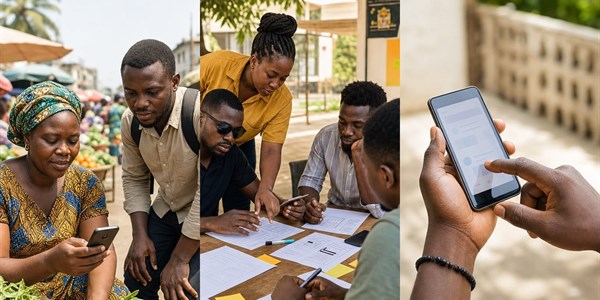
Ghana's digital product market is often described as mobile-first, but that phrase can hide important differences. Screen size, operating-system age, storage, battery life, data cost and network stability all shape whether a service works in practice. Ghana Statistical Service reported that 4.9 million people aged 15 and older did not own a smartphone in its thematic brief on digital exclusion. A polished experience that assumes a recent device and continuous broadband may therefore exclude a meaningful part of the intended market.
Teams should define a minimum viable device and connection before they define visual polish. Essential tasks should survive narrow screens, interrupted sessions and delayed responses. Images need compression, forms need recovery, and the user should always know whether an action was completed.
Design for language, meaning and confidence
Translation is only one layer of localisation. Ghanaian users may move between English and local languages within the same task, while technical words such as “verification,” “wallet,” “beneficiary” or “premium” may not carry a shared meaning. Interface research should test the concept behind a label, not simply the label itself.
Plain language, familiar examples, visible fees and step-by-step confirmation reduce the amount of interpretation a user must do. Audio or assisted flows may help in some contexts, but they should complement rather than replace a clear core journey.
Research beyond Accra's easiest participants
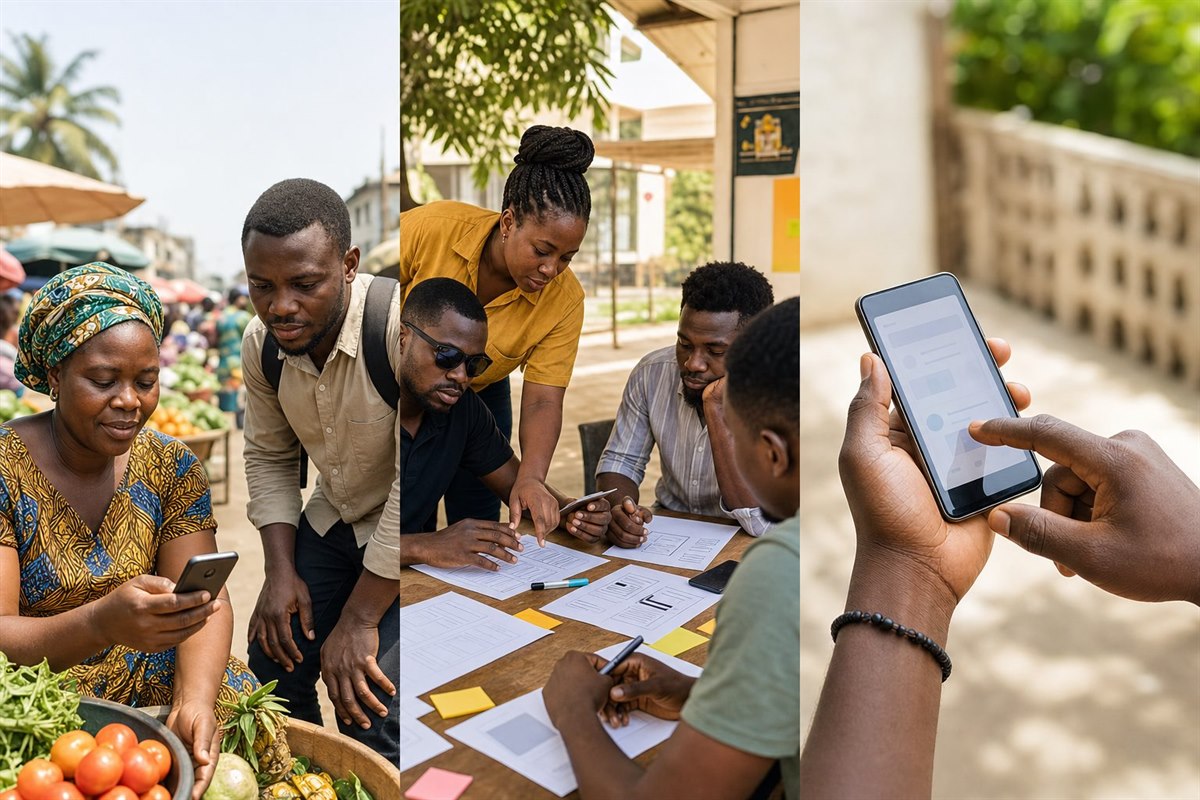
Recruiting only digitally confident participants in Accra produces a narrow picture of Ghana. Research plans should include users across regions, income levels, age groups, occupations and accessibility needs. For agricultural, health, finance or public-service products, intermediaries such as agents, relatives, extension officers and administrators may be part of the real journey.
Field research should examine workarounds: screenshots used as receipts, WhatsApp used as a customer database, shared devices, handwritten ledgers and calls placed after an app fails. These behaviours reveal both unmet needs and the trust mechanisms people already understand.
Make accessibility part of product quality
Strong contrast, meaningful focus states, readable type, descriptive labels and large touch targets help users with disabilities, but they also help everyone using a phone outdoors, under time pressure or on an unfamiliar device. Accessibility should be tested during design and development, not added as a final compliance pass.
Teams can begin with keyboard navigation, screen-reader labels, text resizing, error identification and alternatives to colour-only status. The goal is not a special version of the product. It is one resilient experience with fewer avoidable barriers.
A practical Ghana-ready design standard
Before launch, test the primary journey on a low-cost Android device, a constrained network and a returning session after interruption. Confirm that fees and data use are visible, support is reachable, and critical content remains understandable without animation or high-resolution media. Then measure completion, failure and support demand by device and location rather than relying on aggregate traffic.
Products designed this way can travel more effectively across West Africa because they are built around variable infrastructure and human context rather than an idealised user.
Sources & further reading
- Ghana Statistical Service — Thematic Brief on Digital Exclusion
- Ghana Ministry of Communication — Digital Economy Policy and Strategy
- W3C — Web Content Accessibility Guidelines
Policies and statistics change. Review the latest official releases before making regulatory, investment or operational decisions.