
From Pilot to Infrastructure: Scaling Innovation in West Africa
West Africa does not lack promising pilots. The harder work is building the partnerships, economics, support and governance that allow an innovation to survive beyond its first funding cycle.

The pilot is a question, not a smaller launch
Innovation pilots across agriculture, health, education and public services often demonstrate that technology can work under supported conditions. That is useful, but scale asks different questions: who pays, who supports users, who owns failures, how data moves, and whether institutions can absorb the new workflow.
A strong pilot states its learning questions before implementation. Adoption, unit economics, service quality and partner workload matter alongside technical performance.
Start with the operating system around the product
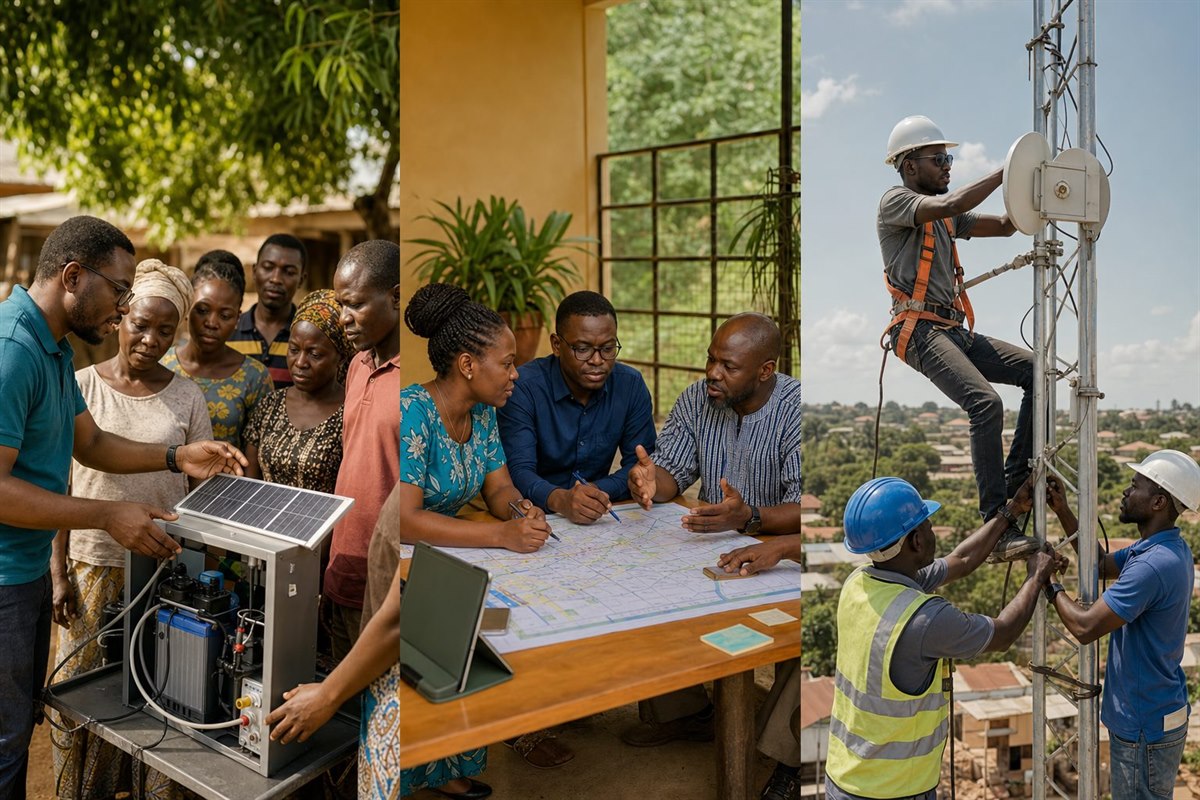
West African markets frequently rely on agents, cooperatives, community organisations, distributors and public institutions. These actors are not friction to be removed; they may be the distribution and trust infrastructure that makes the innovation viable.
Teams should map incentives and responsibilities across the full service. If an app creates extra work for a nurse, extension officer or merchant without creating visible value, adoption will weaken after pilot support ends.
Design partnerships before expansion
Ghana's Digital Economy Policy calls for collaboration among academic institutions, private organisations and government bodies. ECOWAS is likewise advancing regional digital integration, e-government and harmonised policy. The opportunity is meaningful, but partnerships require more than endorsements.
Each agreement should define data stewardship, service levels, training, maintenance, escalation, intellectual property and exit conditions. The best time to negotiate failure is before success creates pressure to expand.
Prove economics at the smallest useful unit
National market-size slides do not prove that one transaction, facility or community is sustainable. Teams need the cost to acquire, onboard, serve and retain a user or institutional partner. They also need to identify who receives value and who has budget authority.
Blended capital can fund public-value innovation, but grant support should make the eventual operating model clearer. It should not hide recurring costs that no participant is prepared to carry.
Scale through standards and repeatability
A scalable service has a repeatable onboarding sequence, minimum data standard, support model and partner contract. Local adaptation remains necessary, but the core should not be reinvented in every market.
The strongest West African innovation companies will behave less like travelling demonstrations and more like infrastructure organisations: reliable, governed, interoperable and accountable to the people who depend on them.
Sources & further reading
- Ghana Digital Economy Policy and Strategy
- ECOWAS Digital Sector Development Strategy announcement
- ECOWAS Regional E-Government Strategy workshop
Policies and statistics change. Review the latest official releases before making regulatory, investment or operational decisions.